
Reader Reviews
Amazon Reader Reviews
What readers are saying across all series and standalone works.
Reviews by Book

The Martian setting feels harsh but strangely alive
Got pulled into this world almost immediately and stayed there. The story doesn't just focus on action which is what gave it its staying power. The emotional weight of the characters choices sits alongside the tension in a way that felt balanced and real. The constant push and pull between loyalty and survival ran through everything and made even the quieter moments feel loaded. Heavy and atmospheric in the best way.
Cassandra Kurtz is one of the best characters in sci-fi
I've followed this series from the beginning and Hunting Armed Men is the payoff I was hoping for. Kurtz is fully realized here — her intelligence, her contradictions, her moral clarity in a world that has none. The cat-and-mouse structure works because both sides are written with equal depth. Erickson never lets you forget the human cost of every decision. Exceptional.
Conrad's shadow looms large and that's a compliment
If you know Heart of Darkness you'll catch all the echoes and if you don't it doesn't matter because the story stands completely on its own. The Mars setting is vivid and the class dynamics feel uncomfortably familiar. Bennett's arc across this series has been one of the most satisfying character journeys I've read in years. This book sticks with you.
Strong finish to a compelling arc
The pacing in the first half is slower than the previous books but it earns it. By the time the final act kicks in you feel the weight of everything that came before. The dialogue between Kurtz and Alethia remains the highlight of the series — sharp, funny, and unexpectedly moving. Knocked one star only because I wanted more of the supporting cast.
Political sci-fi at its sharpest
Erickson uses the future to talk about the present without ever being preachy about it. The world he's built across this series is internally consistent and genuinely frightening in its plausibility. Hunting Armed Men brings the themes of power, race, and resistance to a head in ways that feel earned. One of the best entries in the series.
Readers drawn to military sci-fi with dystopian politics are in for a real treat
J. M. Erickson's Hunting Armed Men is a smartly conceived dystopian science fiction novel, with Mars presented as a place that feels particularly alien at every turn. The author has a gift for world-building, a skill that comes through naturally when static drains energy rifles, leaving gunpowder firearms as field equipment. The characters feel fully formed here. Alethia, Cassie's implanted AI, is my favorite, with literal honesty that brings a dry wit to her exchanges with the surrounding humans. Knowles, a Fort Deadly cadet, has self-possession when visiting troops rely on his understanding of Mars. The science fiction ideas fit the setting beautifully, with giant mushroom-like vegetation setting the tone for cadets who serve as scouts for shipboard soldiers. The pacing moves at a firm clip as Earth's military loyalties widen the scale of the story. Very highly recommended.
What makes this story fascinating is the conflict between entitled officers and adaptive colonists
Erickson delivers an immersive sci-fi adventure that works beautifully because he lets the unforgiving, weapon-ruining elements of the Martian environment dictate how the tactical action unfolds. The pacing hits high gear immediately after the initial shuttle escape, maintaining a swift momentum as the factions converge on the settlement. The plot development unravels with ease, showing a seamless, domino-effect relationship between imperial arrogance and the raw realities of planetary adaptation. What really makes the story fascinating is the conflict between the entitled, rule-following officers and the merit-based, adaptive colonists, which makes the growing tension feel organic — never scripted. The world-building creates a lethal, breathing ecosystem where subterranean biological hazards like sand squid toxins play an important role in how the local militia fights back. Very highly recommended.
If you're a fan of sci-fi, multi-layered themes, and solid character journeys, this has it all
Hunting Armed Men by J.M. Erickson handles the themes of survival and shifting loyalties incredibly well. Erickson builds an amazing sci-fi setting, making the damp, hot subterranean towns of Freeport and Fort Deadly drive the plot and influence the decisions of everyone trapped inside them. Cassandra's epic journey is a major high point, charting her path from a feared revolutionary to a worn-down character in search of a real human connection. The story moves at a great pace, portraying clever, non-lethal ambushes by the militia that breathe new life into standard sci-fi tropes. The inclusion of Alethia, the intuitive AI psychologist, adds a really unique layer regarding mindfulness and self-reinvention. The constant push and pull between the unyielding military hierarchy and the stubborn independence of the colonists keeps you hooked from start to finish.

Bennett's transformation is the heart of this book
I wasn't sure I'd care about Bennett after the first two books but Erickson completely won me over. Watching him confront everything he's taken for granted — his privilege, his assumptions, his complicity — is genuinely uncomfortable in the best way. The Mars underground sequences are tense and vivid. This is the book where the series fully comes into its own.
Timely, urgent, and beautifully written
The parallels to current events are impossible to miss and that's clearly intentional. But Erickson never lets the allegory overwhelm the story. The characters feel real, the world feels lived-in, and the moral questions don't have easy answers. Delta Exchange is one of the most disturbing settings I've encountered in recent fiction. Highly recommended.
Couldn't put it down
Started this on a Friday night and finished it Saturday morning. The pacing is relentless once it gets going and the emotional stakes keep rising. I appreciated that the book doesn't offer easy resolutions — the ending is hopeful but honest. Erickson respects his readers enough not to wrap everything up neatly.
Conrad reimagined for the 22nd century
You don't need to have read Heart of Darkness to appreciate this but if you have the intertextual layers add a lot. The genetically modified creatures in the Martian underground are genuinely unsettling. Bennett's journey into the dark zones mirrors Marlow's river journey in ways that feel organic rather than forced. A remarkable piece of science fiction.
The worldbuilding is extraordinary
Every detail of this future feels thought through — the class system, the technology, the geography of Mars, the political structures. It never feels like an info dump because the world is revealed through action and consequence. The supporting characters are as well-drawn as the leads. This is the kind of science fiction that makes you think long after you've finished.
Intense and thought-provoking
The middle section drags slightly but the payoff is worth it. Betsy Ann Hall is a fascinating character and I hope she appears in future books. The action sequences are well-choreographed and the philosophical underpinning gives them weight. Four stars only because I found the ending slightly abrupt — I wanted more resolution.

Cassie is an unforgettable protagonist
From the first chapter I was completely invested in Cassie's survival and her mission. She's brilliant, flawed, and utterly compelling. The AI implant Alethia adds a fascinating dimension — their relationship is one of the most original I've encountered in recent sci-fi. The dystopian world is terrifying because it feels like a plausible extrapolation of trends already in motion.
Gripping from the first page
I read this in one sitting. The pacing is relentless and the world-building is seamlessly integrated into the action. The class system Erickson has constructed is both alien and uncomfortably familiar. Cassie's voice is sharp and her moral clarity in a morally bankrupt world makes her a genuinely heroic figure. Can't wait for the next book.
Relevant, urgent, and beautifully crafted
This book hit me hard. The parallels to contemporary politics are clear but never heavy-handed. Erickson trusts the reader to make the connections. The writing is lean and precise — no wasted words. The ending sets up the next book perfectly without feeling like a cliffhanger cheat. This is exactly the kind of science fiction the moment calls for.
Strong start to a promising series
The novella format works well here — tight and focused. The world is established efficiently and the characters are immediately distinct. My only quibble is that I wanted more time on Mars before the action kicks in, but that's a minor complaint about a book that does so much right. The AI-human relationship is handled with real nuance.
Erickson at his most politically sharp
The future Erickson imagines is a warning, not a prediction — but it's a warning that lands. The reinstatement of slavery and the erasure of history feel like logical endpoints of forces already at work. Cassie's resistance is inspiring precisely because it's costly. This is science fiction with something to say and the craft to say it memorably.
The Alethia chapters are worth the price alone
I've read a lot of AI characters in fiction and Alethia is one of the most interesting. The way her consciousness expands and her relationship with Cassie deepens across the book is handled with real care. The banter between them is genuinely funny in places which provides welcome relief from the darkness of the setting. Excellent work.
Our book club couldn't stop talking about this
We picked this for our monthly read and ended up spending three hours discussing it. The questions it raises about identity, resistance, and complicity generated real debate. The arranged marriage subplot is handled with more complexity than I expected. Erickson doesn't let any of his characters off the hook easily. Highly recommend for group reading.
Fast, smart, and satisfying
Exactly what I want from a novella — tight, purposeful, and complete. The world is rich enough to feel real without being overwhelming. Cassie is a protagonist worth following and the ending left me immediately wanting the next book. Knocked one star because a few of the secondary characters felt underdeveloped but that's the nature of the format.
Couldn't sleep until I finished it
Started this at 10pm thinking I'd read a chapter or two. Finished at 2am. The tension never lets up and the stakes feel genuinely high. The world Erickson has built is internally consistent and the rules of the society are clear without being over-explained. Cassie's voice is distinctive and compelling throughout. Immediately bought the next book.
Serious science fiction that earns its ambitions
Erickson is doing something genuinely ambitious here — using the conventions of space opera to interrogate the history and present of racial capitalism. The Conrad parallels are handled with sophistication. This isn't allegory that flattens its subject; it's fiction that uses its speculative premise to illuminate real dynamics with clarity and force. Impressive work.
Great action, great ideas
The action sequences are well-written and the ideas behind them give them weight. I appreciated that the book doesn't sacrifice one for the other. The Martian colony setting is vivid and the political structure is believable. My one note is that the pacing in the middle section slows slightly but it picks back up strongly for the finale.
This got me back into science fiction
I drifted away from sci-fi for a few years because so much of it felt either too technical or too shallow. This book reminded me why the genre matters. The human story is front and center and the speculative elements serve it rather than overwhelm it. Cassie is a character I'll be thinking about for a long time. Already started the next book.

The stakes keep rising and so does the quality
Erickson deepens everything that worked in the first book — the world, the characters, the moral complexity. Cassie's mission becomes more dangerous and more ambiguous as the book progresses and the supporting cast gets real development. The New Georgia colony sequences are some of the most vivid writing in the series. Essential reading if you've started the Heart of Darkness saga.
Erickson keeps getting better
Each book in this series is better than the last. The world feels more real with every entry and the characters more fully human. Cassie's relationship with Alethia continues to be the emotional core and it's handled with real tenderness alongside the tension. The ending sets up the next book in a way that made me immediately want to keep reading.
Dark, dense, and rewarding
This is not light reading and it doesn't pretend to be. The darkness of the setting is matched by the moral weight of the choices the characters face. Some readers might find the middle section slow but I found it necessary — the quiet moments make the action hit harder. Erickson is building something substantial here.
The colony politics are fascinatingly detailed
One of the things I love about this series is how thoroughly Erickson has thought through the social and political structures of his world. The colony politics in this book feel real — the factions, the compromises, the violence beneath the surface. Cassie navigating all of this while pursuing her mission makes for compelling reading throughout.
Alethia steals every scene she's in
I came for the plot and stayed for Alethia. The AI character is written with such specificity and warmth that she feels completely real. Her observations about human behavior are often the sharpest commentary in the book. The action is excellent but the relationship between Cassie and Alethia is what makes this series special.
Solid middle entry in a strong series
Does exactly what a good second book should do — expands the world, deepens the characters, and raises the stakes for what comes next. The pacing is slightly uneven in places but the overall momentum carries you through. The final sequence is the best action writing in the series so far. Looking forward to book three.
This series deserves a much wider audience
I've been recommending this series to everyone I know who reads science fiction. The combination of sharp political commentary, vivid world-building, and genuinely compelling characters is rare. Deadly Going Dark is the book where the series fully hits its stride. If you haven't started yet, start now.
Readers who enjoy intelligent dystopian fiction will adore this
J.M. Erickson's Deadly Going Dark is a really well-executed science-fiction dystopian novel. David is a protagonist we want to root for as independence tests the military instincts that have shaped him since childhood. The Republic's caste system is tangible through its people, like Isabelle Roswell, a patrician teenager whose crashed transport draws outsiders toward the Dark Zone, then gives David's guarded loyalties an intimate edge through Maggie, his sister, urging him to face Becky and Tom, the childhood friends he has kept at a distance for years. The extraordinary telling of David's life beyond Earth broadens the book beautifully. His work alongside soldiers drawn from different social classes makes Fort Deadly instantly believable. Erickson also handles political issues sharply, through visual scenes like those same soldiers emerging through the Martian darkness beneath red and green field lights. Readers who enjoy intelligent dystopian fiction with a fiercely humane protagonist will adore this.
A dystopian sci-fi novel laced with drama, adventure, and suspense
If you are looking for a dystopian sci-fi novel laced with drama, adventure, action, suspense, and a coming-of-age tale, Deadly Going Dark by J M Erickson is a worthy pick. Set in the near future, Erickson teases the return of classism and slavery in a technologically advanced world. I was drawn into the characters' troubled world with steady narration and vivid depictions. I could see everything, from the controlled appearance of the living habitat's interior to the harsh exterior shrouded in smog, dark brown skies filled with eroding particles, the grimy underground market of the Delta Exchange, and the Dead Zone's desolate and ruined setting. Erickson uses the story to explore themes of family dysfunction, oppression, inequality, racism, discrimination, exploitation, and technology. In a world where class and status determine power, David must use his own wisdom to bring change.
The pacing mirrors a calculated military campaign — highly recommended
Deadly Going Dark by J.M. Erickson is a dystopian, military science fiction novel that offers a fascinating look at psychological conditioning. The descriptive prose lingers on every detail, like the specific mechanics of kinetic firearms, as well as the oppressive heat of the underground caverns. The pacing mirrors a calculated military campaign, building methodically as the protagonist establishes his cross-caste militia. The book develops high stakes through purely tactical maneuvers as we watch a leader who operates entirely without panic. The outer-rim scenes stay sharp and vivid the whole way through. The story offers a fresh take on revolution by prioritizing day-to-day survival over dramatic grandstanding. It's a nice choice for readers who love precise background details and enjoy complicated political chess matches. Highly recommended.

A worthy conclusion to an extraordinary series
Erickson sticks the landing. Bold Dark Worlds brings the Heart of Darkness saga to a conclusion that honors everything that came before while pushing the themes to their logical and emotional endpoints. Cassie's final arc is both surprising and inevitable. The world feels fully realized and the ending earns its emotional weight. One of the best science fiction series I've read.
Everything I hoped for and more
I've been following this series since Endless Fall of Night and Bold Dark Worlds is the payoff I was hoping for. The scope expands significantly while keeping the intimate character focus that makes the series work. The final confrontation is everything. Erickson has written something genuinely important here — science fiction that will last.
The themes land with full force
The Heart of Darkness series has always been about more than its plot and Bold Dark Worlds makes that explicit without becoming didactic. The questions about power, resistance, complicity, and what it costs to fight for justice are answered — or rather, shown to be unanswerable — with real honesty. This is the kind of science fiction that matters.
Big, ambitious, and mostly delivers
The scale of this book is larger than the previous entries and it mostly works. A few of the new characters introduced late in the series don't get enough development but the core cast is handled beautifully. The action sequences are the best in the series. Four stars because the ending, while satisfying, felt slightly rushed in its final pages.
Read the whole series in a week
Discovered this series through a recommendation and read all five books in a week. Bold Dark Worlds is a fitting conclusion to one of the most consistently excellent science fiction series I've encountered. Erickson's voice is distinctive and his world is unlike anything else in the genre. Highly recommend starting from the beginning.

Burns is a hero worth following
Alexander Burns is the kind of protagonist you root for immediately — damaged, determined, and morally serious. The amnesia setup could feel like a cliché but Erickson uses it to explore questions of identity and loyalty that give the thriller plot real depth. The team Burns assembles feels like a family by the end. A strong debut and a great start to the series.
Clancy meets psychology
If you like Tom Clancy but wish the characters had more inner life, this is the book for you. The tradecraft is convincing and the action is well-paced but what sets Albatross apart is the psychological depth. Burns's PTSD and his recovery are handled with real care. The love story is genuinely moving. Highly recommended for thriller fans.
Gripping debut with a few rough edges
The plotting is occasionally uneven and some of the secondary characters could use more development but the core story is compelling and Burns is a great lead. The action sequences are well-written and the emotional beats land. You can see Erickson finding his voice here and it's a strong one. Four stars for a debut that promises a lot.
The team dynamic is the best part
What makes Albatross work is the group Burns assembles — each member is distinct and their relationships feel earned. The banter and the loyalty and the occasional friction all ring true. The thriller plot gives them something to do but the character work is what makes you care about the outcome. Looking forward to seeing where the series goes.
Authentic and gripping
The military and intelligence details feel authentic without being overwhelming. Erickson clearly knows this world and uses that knowledge to ground the more dramatic elements. Burns's background as a special ops agent is handled with credibility. The moral questions about loyalty and betrayal are the kind that stay with you after the last page.
A solid foundation for a great series
Albatross is clearly a first novel in some ways — the pacing isn't always smooth and the plot occasionally strains credibility — but the characters are so well-drawn that you forgive the rough edges. By the end I was completely invested in Burns and his team. The series only gets better from here.
Couldn't put it down
Started this on a Sunday afternoon and finished it that night. The momentum builds steadily and the final act is genuinely tense. Burns is a protagonist you want to see succeed and the obstacles Erickson puts in his way feel real rather than contrived. The emotional core of the book — the love story and the found family — gives the action its weight.
Discovered this series by accident and I'm so glad I did
Picked this up on a whim and ended up reading the whole series. Albatross sets up the world and the characters with real skill. The premise is familiar — rogue agent, government conspiracy — but the execution is fresh because Erickson is more interested in his characters' inner lives than in the mechanics of the plot. Excellent start.

Better than the first — and the first was great
Erickson tightens everything in Raven. The plotting is sharper, the pacing more assured, and the emotional stakes higher. Samantha's death hits hard because Erickson has made you care about her. Burns's grief and rage drive the book in a way that feels psychologically real. The moral ambiguity of his revenge mission is handled with real sophistication.
The tension never lets up
From the opening pages to the final chapter, Raven is relentlessly tense. Erickson has mastered the art of the thriller — every scene advances the plot or deepens the characters, often both. The government conspiracy elements feel plausible and the personal stakes keep you emotionally invested throughout. One of the best thrillers I've read in years.
The gray areas are what make this special
Burns is not a clean hero and Raven doesn't pretend otherwise. His methods are questionable and his motivations are mixed and Erickson doesn't let him off the hook. The question of whether vengeance can be justice is at the heart of the book and it's asked honestly. The ending is satisfying but not comfortable. Exactly right.
Great action, great characters
The action sequences are excellent and the character work is even better. My only complaint is that a few of the plot threads from Albatross don't get the resolution I was hoping for but that may be setting up future books. Burns and Becky's dynamic is one of the most interesting relationships in the series. Four stars for a book that's very close to five.
The government conspiracy feels real
Erickson has clearly done his research on intelligence agencies and the result is a conspiracy thriller that feels grounded rather than fantastical. The bureaucratic evil is more frightening than any individual villain. Burns's decision to release the files is handled with real moral seriousness — the consequences feel genuine. Excellent work.
Read it in one sitting
Took this on a long flight and finished it before we landed. The pacing is perfect for that kind of reading — propulsive enough to keep you turning pages but substantial enough to feel like you've read something real. Burns is a great protagonist and the supporting cast is excellent. Already downloaded Eagle.
Thriller with genuine literary ambition
Raven operates on multiple levels simultaneously — as a thriller it's gripping, as a character study it's insightful, and as a meditation on justice and vengeance it's genuinely thoughtful. Erickson is doing more than most thriller writers attempt and succeeding at most of it. The Kirkus comparison to Clancy and Ludlum is apt but undersells the psychological depth.

Burns gets his humanity back
Eagle is the book where Burns becomes fully human again. His recovery — emotional, physical, moral — is the real story and Erickson handles it with care. The dog subplot sounds like it shouldn't work but it absolutely does. The action is excellent but it's the quieter moments that make this entry in the series so memorable.
The series keeps getting richer
Three books in and Erickson is still finding new dimensions in his characters and his world. Eagle expands the scope of the conspiracy while keeping the focus on Burns and the people around him. The new characters introduced here are well-drawn and the returning cast gets real development. The ending left me immediately wanting Falcon.
Strong entry with a few pacing issues
The middle section is slightly slower than the previous books but the character work justifies it. Burns's relationship with Daniels is the most complex antagonist dynamic in the series and Eagle develops it well. The action sequences are as good as ever. Four stars because the ending feels slightly abrupt — I wanted one more chapter.
The intelligence world feels completely real
Erickson's knowledge of how intelligence agencies actually work gives this series a credibility that most spy thrillers lack. The bureaucratic politics, the competing loyalties, the way information is weaponized — all of it rings true. Burns navigating this world while dealing with his own demons makes for compelling reading throughout.
The dog subplot is unexpectedly moving
I wasn't expecting to be moved by a subplot involving a dog in a spy thriller but here we are. The parallel between Burns's recovery and the dog's is handled with real subtlety. It's the kind of detail that reveals a writer who thinks carefully about what his story is actually about. Eagle is the most emotionally resonant entry in the series.
Sets up Falcon perfectly
Eagle does the difficult work of a third book — deepening the world and the characters while setting up the final confrontation. It doesn't have the propulsive momentum of Raven but it earns its slower pace with genuine character development. The Daniels threat feels more real and more personal than ever. Ready for Falcon.

A satisfying and surprising conclusion
Falcon takes the series in a direction I didn't expect and it works beautifully. The dream sequences could have felt like a gimmick but they're handled with real craft — they reveal character and advance the emotional story in ways the waking narrative can't. The final confrontation between Burns and Daniels is everything the series has been building toward.
The afterlife sequences are haunting
The visits Burns has with people from his past while he's drugged are the most emotionally powerful writing in the series. Erickson uses the dream logic to explore grief, guilt, and love in ways that feel genuinely moving. The action plot is excellent but these sequences are what make Falcon something more than a thriller.
Worth every page of the journey
I've been reading this series since Albatross and Falcon is the conclusion it deserves. The threads from all four books come together in ways that feel earned rather than contrived. Burns's arc from damaged amnesiac to something approaching peace is one of the most satisfying character journeys I've followed in fiction. Excellent series.
Different tone but it works
Falcon is quieter and more introspective than the previous books and some readers might find that jarring. I found it appropriate — this is a book about endings and it has the right emotional register for that. The action is still there but it serves the character story rather than driving it. Four stars because the shift in tone takes some adjustment.
The FBI subplot adds real depth
The FBI investigation running parallel to Burns's captivity adds a dimension that the previous books didn't have. Seeing the events from outside Burns's perspective gives the reader information he doesn't have and creates a different kind of tension. Erickson handles the multiple viewpoints with skill. A worthy conclusion to a great series.
I cried at the end
I don't usually cry at thrillers but the final pages of Falcon got me. The emotional payoff is real because Erickson has spent four books making you care about these people. The resolution is bittersweet in exactly the right way — hopeful but honest about what's been lost. One of the most emotionally satisfying series conclusions I've read.
Going back to reread the whole series
Finished Falcon and immediately started Albatross again. Knowing where the story ends makes the early books richer — the seeds of everything are there from the beginning. Erickson clearly had a plan and executed it. The Birds of Flight series is a genuine achievement in the thriller genre. Highly recommend reading all four books in sequence.

A perfect coda to the series
Flight of the Black Swan feels like a gift to fans of the series — a chance to spend more time with characters we love in a story that has its own momentum and purpose. The novella format suits the material perfectly. Erickson knows when to be economical and this is a model of efficient storytelling. Highly recommended for anyone who loved the main series.
Proves Erickson is as good at short form as long
The novella format requires a different kind of discipline and Erickson demonstrates he has it. Every scene earns its place. The action is crisp and the character moments are precise. Flight of the Black Swan is a complete story that also enriches the larger series. More of this, please.
Short but satisfying
At novella length this is obviously a quicker read than the main series books but it doesn't feel slight. The story is complete and the character work is as strong as ever. My only complaint is that I wanted more — which is probably the best thing you can say about a short work. Four stars because I wish it were longer.
Starts with action and never stops
The opening pages are some of the most propulsive writing in the series. Erickson wastes no time and the story moves at a pace that makes the novella length feel exactly right. The interweaving plotlines that define the series are here in miniature and they work just as well at this scale. A great addition to the Birds of Flight world.
The perfect ending to a great series
Having read all five entries in the Birds of Flight series, Flight of the Black Swan is the ending I didn't know I needed. It provides closure while leaving the world open. The characters feel fully themselves and the story has real stakes despite its brevity. Erickson has built something special with this series and this is a fitting final chapter.

Future Prometheus, Book 1
Future Prometheus: Emergence & Evolution
One of the most original premises in recent sci-fi
The setup — a cryogenically frozen scientist wakes up in a matriarchal future as the only man — sounds like it could be played for cheap irony but Erickson treats it with complete seriousness. Melendez is a fascinating protagonist and the artificial persons he encounters are some of the most thoughtfully conceived AI characters I've read. The philosophical questions are real and the story is gripping.
Raises questions that stay with you
What does it mean to be human? What is the difference between sentience and sapience? These are the questions at the heart of Future Prometheus and Erickson explores them through story rather than lecture. The APs are not metaphors — they're characters, and their struggle for recognition and rights is genuinely moving. Dystopian literature at its finest.
Worthy of its literary influences
The Shelley and Wells references are not decorative — they're structural. Erickson is in genuine dialogue with the tradition of science fiction as social critique and he holds his own. Melendez's journey from confusion to understanding to action mirrors the best of the genre's tradition. The novella format keeps it tight and every page counts.
The gender dynamics are handled with real nuance
A lesser writer would have used the matriarchal society as either utopia or dystopia. Erickson refuses both easy options. The society he depicts is complex — better in some ways, worse in others, and above all human in its contradictions. Melendez's position as the only man is used to explore questions of power and identity without reducing either to a simple lesson.
Melendez is a rare and valuable protagonist
As someone on the autism spectrum I found Melendez's portrayal genuinely moving. His neurodiversity is presented as a strength and a complexity rather than a limitation or a superpower. The way his mind works is integral to the story and Erickson handles it with evident care and research. Representation like this matters.
Two strong novellas that work as a whole
The two-novella structure works well — Emergence establishes the world and Evolution deepens it. The transition between them is handled smoothly and the second novella benefits from the groundwork laid in the first. My only note is that Evolution ends somewhat abruptly, clearly setting up the next volume. Four stars for a book that's very close to five.
Couldn't stop reading
The warning in the US Review of Books is accurate — this is highly engaging and you will lose track of time. I started Emergence on a Tuesday evening and finished Evolution before midnight. The world is vivid, the characters are compelling, and the ideas are genuinely interesting. One of the best science fiction debuts I've encountered.
Classic science fiction sensibility with contemporary relevance
Future Prometheus has the feel of classic science fiction — ideas-driven, character-focused, morally serious — while addressing questions that are urgently contemporary. The pandemic that transforms men into violent creatures is clearly a thought experiment about toxic masculinity taken to its logical extreme. Erickson handles the premise with intelligence and humanity.

The series hits its full stride
Future Prometheus II is where the series fully realizes its ambitions. The three-novella structure allows Erickson to develop the world and the characters across a broader canvas while maintaining the tight focus that made the first volume work. Melendez's leadership of Omega Platoon is compelling and the Aurora Prime threat is genuinely frightening.
The Shakespeare quotes are perfectly placed
Erickson's use of Shakespeare throughout the series is one of its most distinctive features and Future Prometheus II uses it to greatest effect. The quotes illuminate the action rather than decorating it. The parallel between Melendez's situation and various Shakespearean protagonists is drawn with real intelligence. This is a writer who has read widely and thought carefully.
Aurora Prime is a remarkable antagonist
The best antagonists are the ones whose logic you can follow even as you oppose them and Aurora Prime is exactly that. Her vision of a world without the contradictions of human emotion is internally consistent and genuinely frightening. The scenes between her and Melendez are the intellectual heart of the book. Erickson has created something special here.
Three strong novellas with uneven connective tissue
Each of the three novellas is excellent on its own terms but the transitions between them are occasionally abrupt. The overall arc is satisfying and the climax is genuinely exciting but a few threads from the first volume don't get the resolution they deserve. Four stars for a book that's very good but not quite as seamless as it could be.
Mare Sade Singh deserves her own series
Singh is one of the most compelling characters in the series and Future Prometheus II gives her real development. Her relationship with her son Roberto is handled with genuine emotional complexity. The scenes between her and Melendez have a warmth and tension that grounds the larger action. I would read a Singh-focused spinoff in a heartbeat.
This would make an incredible TV series
The Self-Publishing Review comparison to Falling Skies is apt. The ensemble cast, the military action, the philosophical underpinning — all of it would translate brilliantly to the screen. But the book works completely on its own terms. The visual imagination is extraordinary and the character dynamics are exactly what serialized drama needs. Highly recommended.
A worthy continuation of a remarkable series
Future Prometheus II delivers on every promise the first volume made. The world is richer, the characters are deeper, and the ideas are more fully developed. The climax is genuinely exciting and the ending sets up future volumes in a way that feels earned rather than manipulative. One of the best science fiction series currently being written.

A fresh take on ancient astronaut theory
Erickson takes the ancient astronaut premise and treats it with genuine scientific rigor. The Terran civilization is fully realized and the questions about the origins of humanity are explored with real intelligence. Andrea Perez is a compelling protagonist and the government conspiracy elements add thriller momentum to the philosophical core. A genuinely original piece of science fiction.
The scale is breathtaking
Erickson moves from sixty-three million years ago to the present day with complete confidence. The scope of the story — planets, civilizations, the origins of life — is handled without ever losing the human scale. The Latin language and ceremonial elements of the Terran culture are beautifully imagined. This is science fiction with genuine cosmic ambition.
Classic sci-fi with a modern sensibility
The Self-Publishing Review comparison to Doctor Who is apt — there's the same sense of vast time scales and civilizations beyond human comprehension. The novella format keeps it from getting too dense and the pacing is well-managed. My only note is that I wanted more time with the Terrans — they're fascinating and the book moves past them too quickly.
The FBI conspiracy elements are gripping
The thriller plot — government agents suppressing Andrea's research — is handled with real tension. The scenes where she realizes the danger she's in are some of the most effective in the book. Erickson balances the cosmic scale of the backstory with the immediate personal danger of the present-day plot with real skill. Highly recommended.
The philosophical questions are the real draw
The thriller plot is competent but the real interest is in the philosophical questions Erickson raises about the nature of consciousness, the origins of civilization, and the relationship between creator and created. These questions are embedded in the action rather than stated directly which is the right approach. Four stars because I wanted more depth in the present-day sections.
Perfect length for the story it tells
Some stories need to be novellas and this is one of them. The tight format forces Erickson to be economical and every scene earns its place. The world is established efficiently and the characters are immediately distinct. The ending sets up the sequel in a way that feels earned. Immediately downloaded Apocalypse.

The scope expands magnificently
Apocalypse takes everything that worked in Revelations and amplifies it. The threat of Jupiter's gravitational disruption is handled with real scientific plausibility and the stakes feel genuinely cosmic. The interplay between the different species — humans, Terrans, Martians, AIs — is the most complex and satisfying in the series. Erickson is building something remarkable.
The species dynamics are fascinating
The US Review of Books is right that the interplay between the species is what makes this book charming as well as compelling. The Terrans, the Martians, and the AIs all have distinct voices and perspectives and their interactions reveal character and advance the plot simultaneously. Erickson has created a genuinely diverse universe in the best sense of the word.
Pure adventure with real ideas
If you want science fiction that's genuinely fun to read while also making you think, Intelligent Design: Apocalypse delivers both. The adventure plot is propulsive and the ideas embedded in it are substantive. The cosmic scale doesn't overwhelm the human story — if anything it makes the personal stakes feel more significant. Excellent work.
The religion-science dialogue is handled well
The US Review of Books description of this as a book for readers open to both fictional science and fascinating religion is accurate. Erickson doesn't resolve the tension between scientific and religious ways of understanding the universe — he uses it productively. The originators of the universe are present but not explained, which is exactly the right choice.
Better than the first — which was already great
Revelations was excellent but Apocalypse is better. The world is more fully realized, the characters are deeper, and the stakes are higher. The ending is genuinely surprising and emotionally satisfying. Erickson has created a science fiction universe that rewards investment. Highly recommended for fans of ideas-driven adventure fiction.
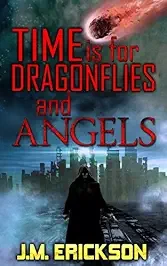
The best kind of short fiction collection
Each story in this collection is complete and satisfying on its own while also connecting to the others in ways that reward careful reading. Erickson's range is impressive — from intimate character studies to cosmic speculation — and his voice is consistent throughout. The Massachusetts settings give the collection a distinctive sense of place. Highly recommended.
The multiverse theme is handled with real imagination
The Self-Publishing Review is right that multiverse theory is the central theme and Erickson explores it from multiple angles without repeating himself. Each story finds a different way into the same set of questions about choice, identity, and the roads not taken. Rogue Event is the standout for me but every story earns its place.
The literary homages are well-executed
Neurogenesis and To See Behind Walls are the most explicitly literary stories in the collection and they work because Erickson understands what made the originals great and finds something new to say with the premises. The Flowers for Algernon riff is particularly moving. Four stars because a couple of the shorter pieces feel slight compared to the stronger entries.
The Massachusetts settings feel completely real
As someone who grew up in the Merrimack Valley I appreciated the specificity of the settings. Erickson uses the familiar geography to make the speculative elements more unsettling — the contrast between the ordinary and the extraordinary is one of the collection's great strengths. The MIT story is particularly effective in this regard.
Rogue Event alone is worth the price
The story about humanity's preparation for a rogue planet passing through the solar system is one of the most quietly devastating things I've read in short fiction. The scope is enormous but the focus stays human. The ending is perfect — hopeful and heartbreaking simultaneously. The rest of the collection is excellent too but Rogue Event is something special.
Erickson at his most experimental
This collection shows a different side of Erickson than the novels — more playful, more formally experimental, more willing to leave things unresolved. The Gray is the most ambitious story and the most divisive — I found it fascinating but I can see why some readers might find it too strange. Four stars for a collection that takes real risks.

The mythology is handled with real intelligence
Erickson takes the Lucifer myth and reimagines it as a science fiction coming-of-age story without losing what makes the original myth powerful. Victor's transformation on Earth — the ruined planet — is genuinely moving and the parallels to the biblical story are drawn with subtlety. This is the kind of genre fiction that rewards literary attention.
Victor is a protagonist worth following
The prince's journey from sheltered scholar to something harder and more purposeful is handled with real care. Erickson doesn't rush the transformation — you feel every stage of it. Sergeant Devin is an excellent foil and their relationship is the emotional core of the book. The world-building is rich without being overwhelming. Highly recommended.
Pure adventure with real depth
The Self-Publishing Review description — survivalist nail-biter with coming-of-age drama — is exactly right. The survival sequences on Earth are genuinely tense and the character development that happens within them is earned rather than imposed. Erickson has created a universe that feels fully realized and a story that stands completely on its own.
The monarchy politics are fascinating
The political dynamics of the royal family are one of the most interesting elements of the book. The brothers' rivalry and the institutional corruption of the monarchy feel real and the stakes of Victor's survival are embedded in that political context. My only note is that I wanted more time in the royal court before the action moves to Earth. Four stars for a book that's very close to five.
Sergeant Devin is one of Erickson's best characters
Devin's moral crisis at the opening of the book — refusing to participate in human rights violations and accepting the consequences — establishes her as a character of real integrity. Her protection of Victor is not just professional duty but a moral commitment. The relationship between them is the heart of the book and it's handled beautifully.
Works perfectly as a standalone
You don't need to have read any of Erickson's other work to enjoy this — it's completely self-contained. The world is established efficiently and the characters are immediately engaging. The ending is satisfying while leaving room for future stories. Four stars because the middle section occasionally loses momentum but the opening and closing thirds are excellent.

The most quietly devastating novella I've read
Rogue Event takes an apocalyptic premise — a rogue planet sending Earth into deep space — and uses it to explore what makes life worth living. Gabriel Lawless is a perfect protagonist for this story: his refusal to be numbed by the efficiency drugs makes him both a criminal and the most human person in the book. The ending is exactly right.
Gabriel Lawless is unforgettable
The character of Gabriel — passionate, curious, adventurous in a world that has criminalized all three — is one of Erickson's finest creations. His relationship with his family, slowly eroded by their compliance with the efficiency regime, is heartbreaking. The cosmic event that ends the world is almost beside the point — the real story is what it means to be fully human.
The corporate dystopia feels uncomfortably real
Central Corporate Command & Mainframe Control is one of the most plausible dystopian governments I've encountered in fiction. The emotional suppression drugs, the criminalization of curiosity and passion, the efficiency-above-all ideology — all of it feels like a logical extrapolation of real trends. Erickson uses the science fiction premise to make a serious point about what we risk losing.
The literary references add depth
Gabriel's crime of possessing literature is one of the most effective details in the book — the idea that stories themselves are contraband in this world says everything about what the regime fears. The underground community of readers and thinkers is sketched quickly but vividly. Four stars because I wanted more time with the underground before the apocalypse arrives.
Perfect in its brevity
Rogue Event is exactly as long as it needs to be. The novella format suits the story perfectly — tight, focused, and complete. The US Review of Books is right that the entertainment value is consistent throughout. But what makes it more than entertainment is the emotional truth at its center. Gabriel's story is about what we owe to our own humanity.

A worthy homage to Thurber
The Secret Life of Walter Mitty is one of the great American short stories and Erickson's homage to it is genuinely worthy of the original. He takes the premise — a man who escapes into fantasy — and gives it a science fiction dimension that deepens rather than replaces the psychological insight. The ending is both surprising and inevitable. Excellent work.
The fantasy sequences are beautifully written
The distinction between the protagonist's inner fantasy life and his outer reality is handled with real craft. The fantasy sequences are vivid and specific — not generic wish fulfillment but a particular vision of what this particular person needs. The science fiction element that blurs the boundary between fantasy and reality is introduced at exactly the right moment.
Strong but slight
To See Behind Walls is a well-crafted piece of short fiction that does what it sets out to do with skill and economy. The Thurber influence is clear but Erickson makes the premise his own. My only note is that it's the slightest of the standalone works — the ideas are interesting but not as fully developed as in Rogue Event. Four stars for a good story that could have been a great one with more space.
Best read as part of the Time Is for Dragonflies collection
To See Behind Walls appears in the Time Is for Dragonflies collection and I think it benefits from that context — the other stories around it illuminate what Erickson is doing with the Walter Mitty premise. As a standalone it's good; as part of the collection it's excellent. Four stars as a standalone, five as part of the larger work.
The shared consciousness premise is fascinating
The idea of an afterlife as a shared consciousness — a kind of collective digital space — is one of the most original premises I've encountered in short science fiction. Erickson develops it with real care and the two protagonists are immediately engaging. The accidental connection between Sage and Cobb is handled with both scientific plausibility and emotional resonance.
Sage is a remarkable character
Dr. Melanie Sage is one of Erickson's most interesting protagonists — a brilliant scientist whose autism is managed by a neural chip that she has modified herself. The implications of that modification drive the plot and reveal character simultaneously. Her relationship with Dr. Cobb is handled with real sensitivity. A strong early work that shows the range of Erickson's imagination.
Intriguing premise, slightly rushed execution
At 62 pages this is very short even for a novella and the premise deserves more space than it gets. The characters are well-drawn and the ideas are genuinely interesting but the resolution feels rushed. Four stars for a work that suggests what Erickson would become — the imagination is fully there, the craft is still developing.
A promising early work
Afterlife Code is clearly an early work — the prose is less assured than Erickson's later writing and the plotting is occasionally uneven. But the core ideas are already there: the intersection of technology and consciousness, the complexity of human relationships, the moral weight of scientific discovery. Worth reading as a window into where the author started.